
Sun & Moon printables
A calendar divides time the way people agreed to. These four sheets show the time the sky keeps: when the Sun rises over your own town, how the daylight swells and shrinks through the year, what the Moon was doing on a night that matters to you, and what is worth going outside for in the year ahead. Each is computed for the place you choose, in your own browser, and comes out as a free PDF with no sign-up and no watermark.
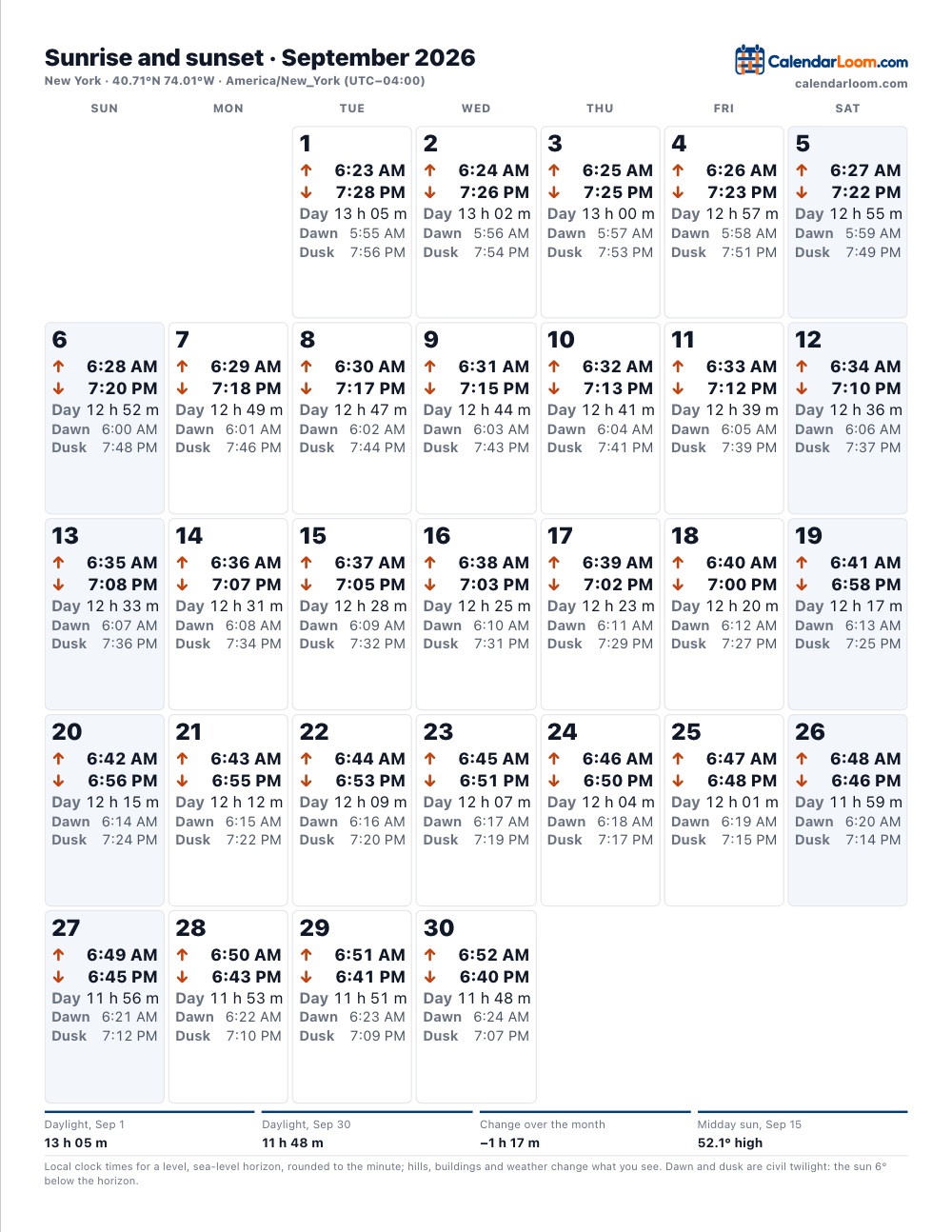
Sunrise and sunset calendar
One month on one page: sunrise, sunset and day length for every day, with optional civil twilight, golden hour and solar noon. On the local clock, daylight saving included, for any place from the equator to the poles.
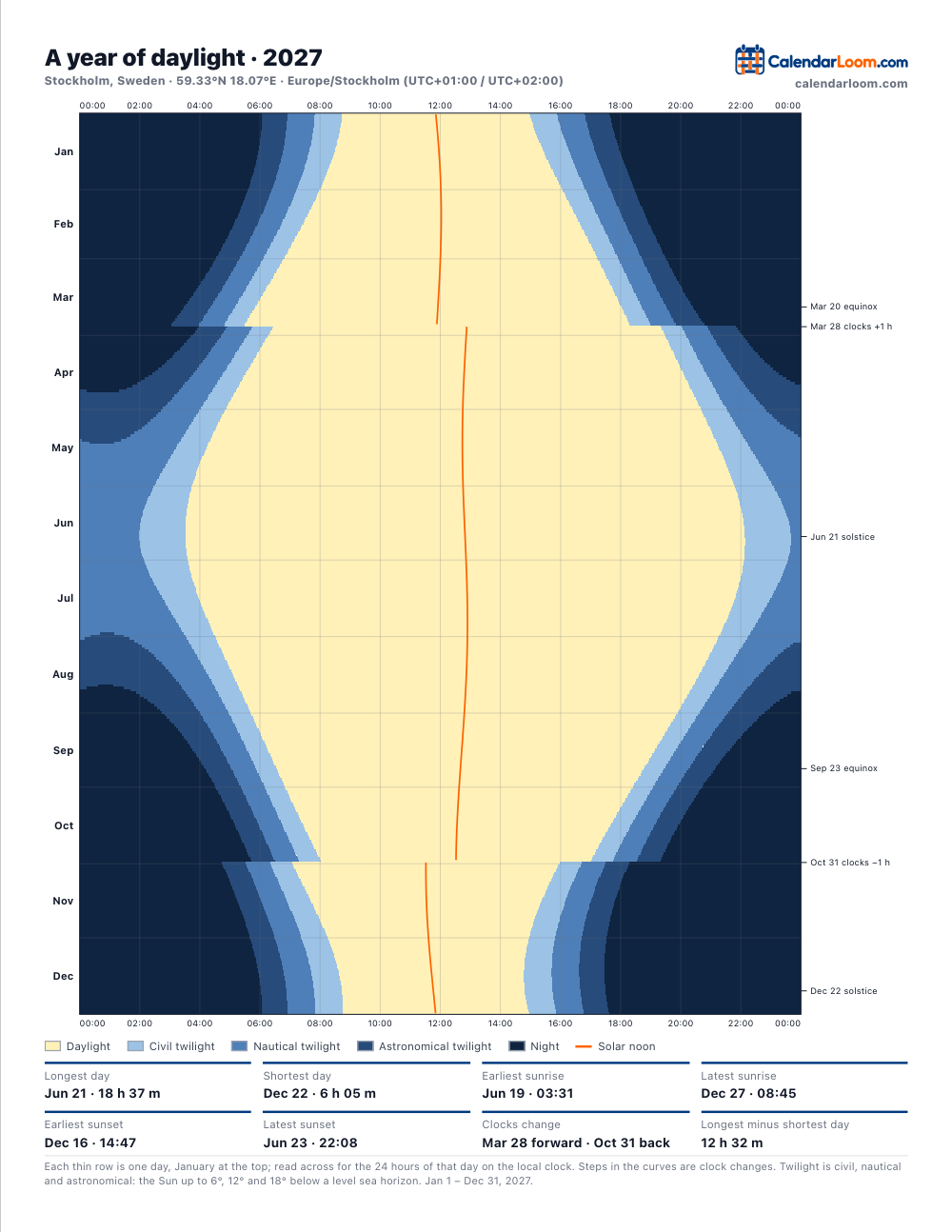
Daylight chart
A whole year drawn as one picture: 365 thin rows, each 24 hours wide, coloured by daylight, the three twilights and night. The shape is the signature of your latitude, with the clock changes showing as steps.
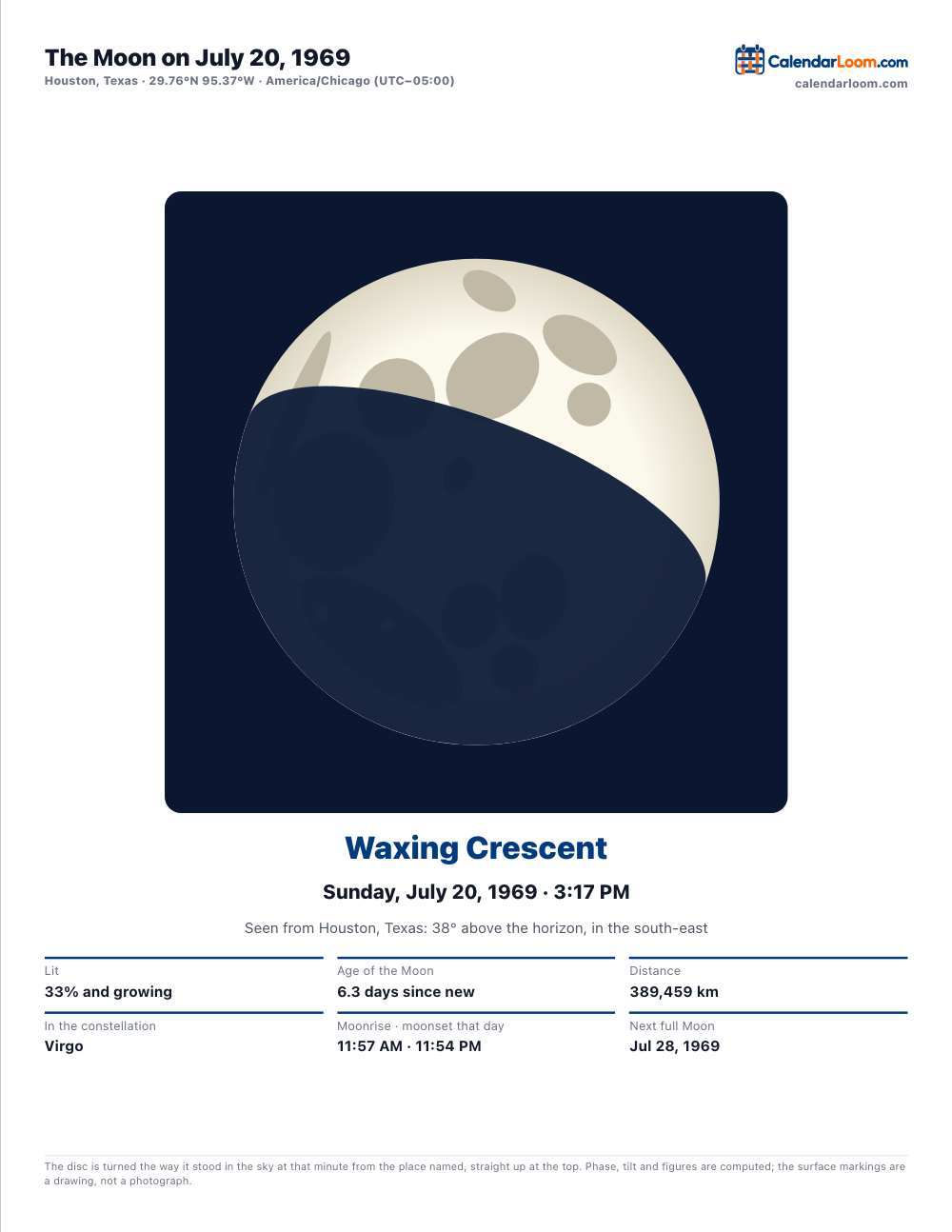
The Moon on any date
What the Moon looked like on the night of a birth, a wedding or a first meeting, from 1900 to 2100: the phase, the tilt of the lit edge and the turn of the face as seen from that place, set on a keepsake sheet with your own words.
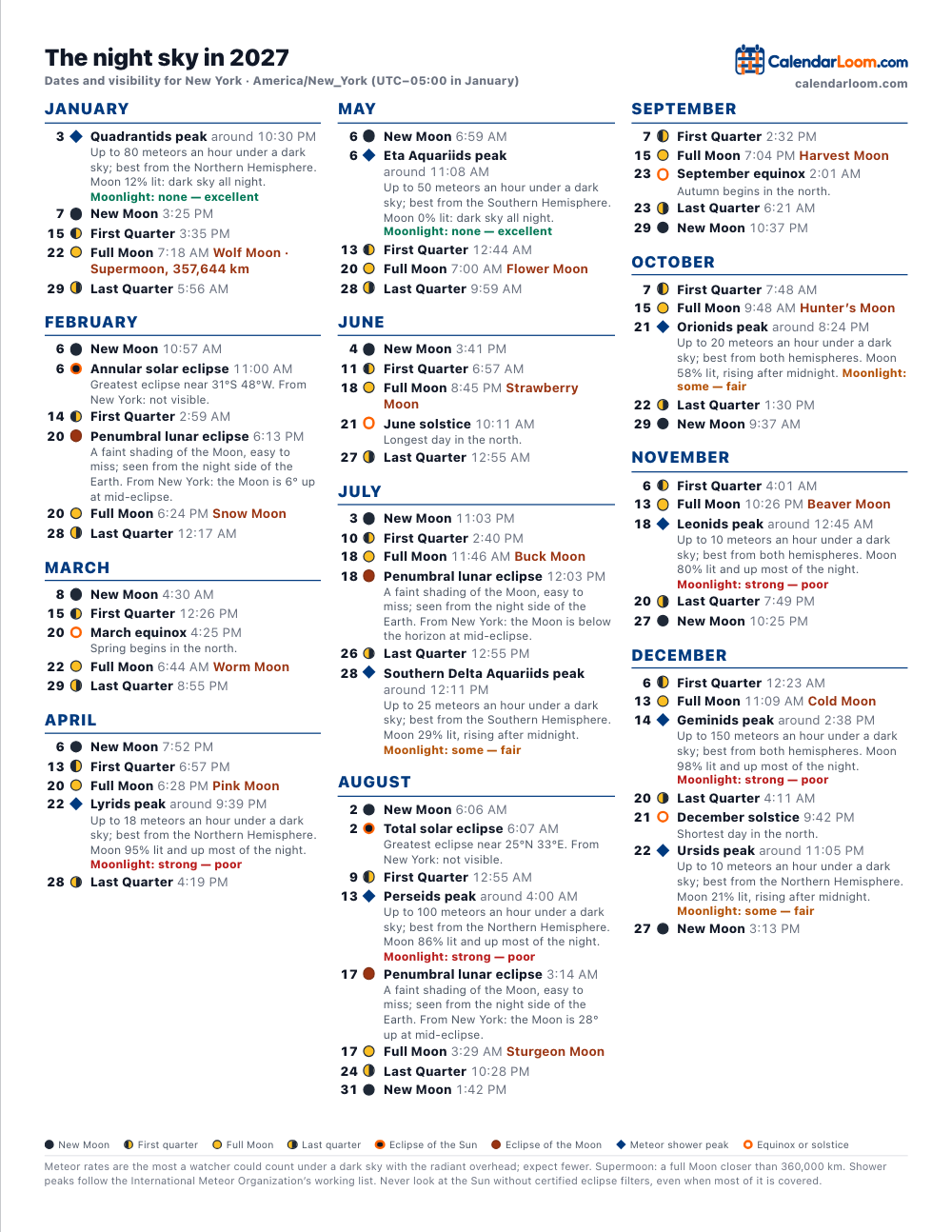
Night sky calendar
A year of Moon phases, named full Moons, supermoons, every eclipse, nine meteor showers rated for moonlight, and the equinoxes and solstices — dated on your own clock, and with a place chosen, told whether each eclipse is visible from it.
2026 at a glance
The year turns on March 20 (march equinox), June 21 (june solstice), September 23 (september equinox) and December 21 (december solstice) — dates in UTC. It brings 13 full Moons and 4 eclipses:
- February 17 — annular solar eclipse
- March 3 — total lunar eclipse
- August 12 — total solar eclipse
- August 28 — partial lunar eclipse
The meteor showers with the darkest skies this year: Lyrids (April 22), Perseids (August 13), Leonids (November 17), Geminids (December 14). The night sky calendar has the full list, on your clock.
How it is all computed
Nothing on these sheets is looked up from a table. Positions of the Sun and the Moon are calculated on your device with Astronomy Engine, an open-source library tested against NASA’s JPL ephemerides, and each event — a sunrise, a full Moon, the greatest moment of an eclipse — is found by searching for the instant it happens. Times are then put on the real clock of the place, with its daylight saving rules. The code around the library is checked against published times for cities on five continents and against the hard cases: the midnight Sun, a sunset after midnight, the 23-hour day when the clocks go forward.
A place is found by name through a place-search service, and the town name you type is the only thing that leaves your browser. The coordinates, the dates, anything you write on a sheet and the PDF itself stay on your device. The place you choose is remembered there, so all four tools open on your town. Sheets you make are yours, for any use.